I asked a review seller for 10,000 reviews
In October a Facebook profile messaged a throwaway research page I'd spun up, offering to sell it reviews on Google, Facebook, Trustpilot, Yelp and the BBB, plus likes and follows. Most people block these. I said yes.
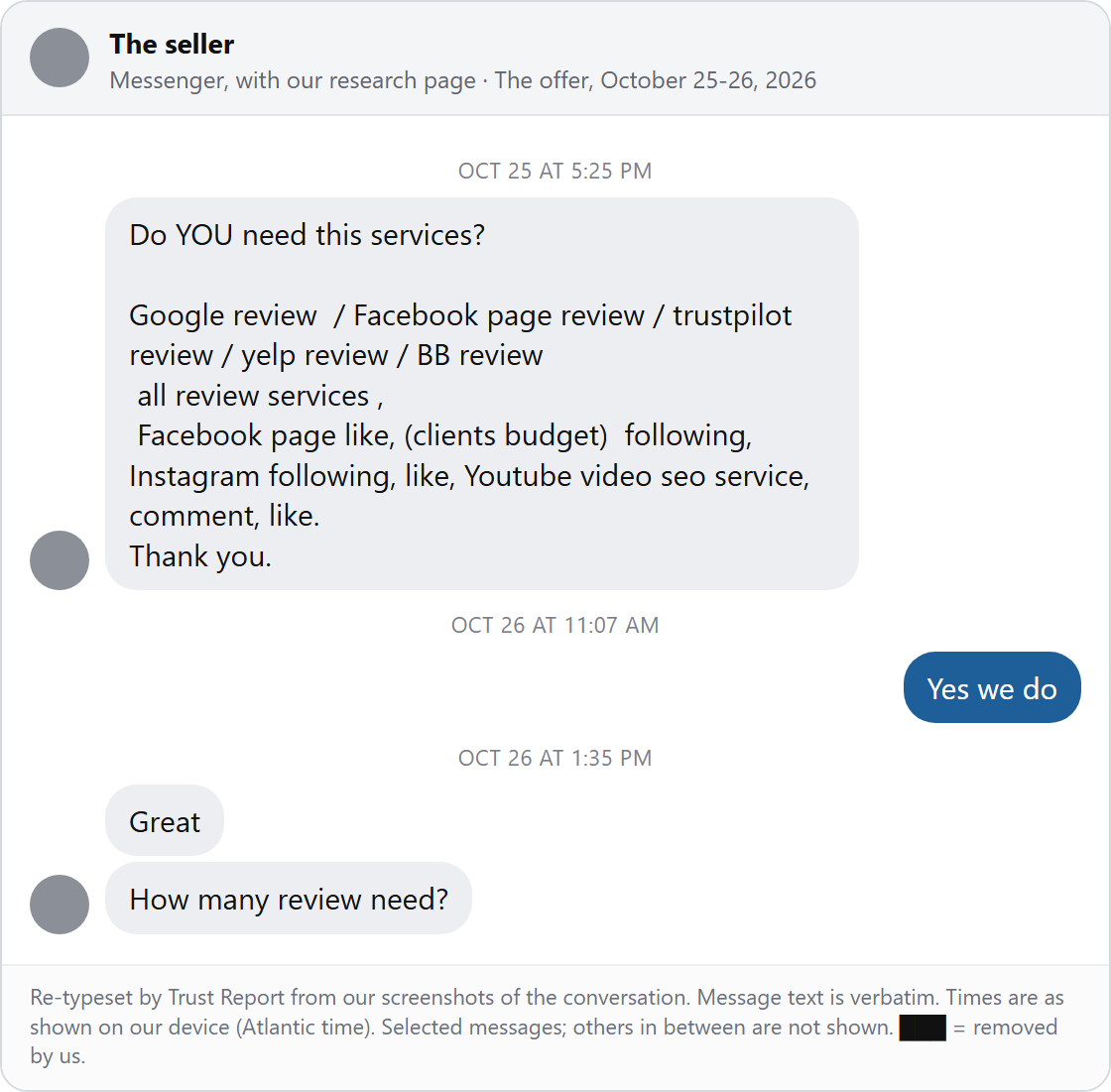
The bait was labelled
That page was never meant to win anyone over. It was a single-use honeypot: a disposable research account with a handful of followers, built to be found by exactly this kind of message. And it says what it is, right there in the bio:
Hi! We're a group of Canadians who investigate deceptive media and inauthentic behavior. We ask questions when something seems a bit off.
If you're here because we commented on something of yours, it's already been screenshotted.
A page that announces it investigates inauthentic behaviour is the last place you'd sell inauthentic behaviour. He did anyway. Keep that in mind for later.
For two weeks I was a honeypot buyer. My rules: I typed every message myself, no money moved, the only delivery target was my own page, and I'd never hand over an account. This is the short version. The full write-up, with method, TTPs mapped to DISARM, the psychology and the ethics, is the paper: Honeypot Buyer: an inside look at the CIB economy.
The trial
I asked for a trial and pointed him at my own page. He asked how many reviews and which keywords, wrote one for me to approve, and a day later sent proof.
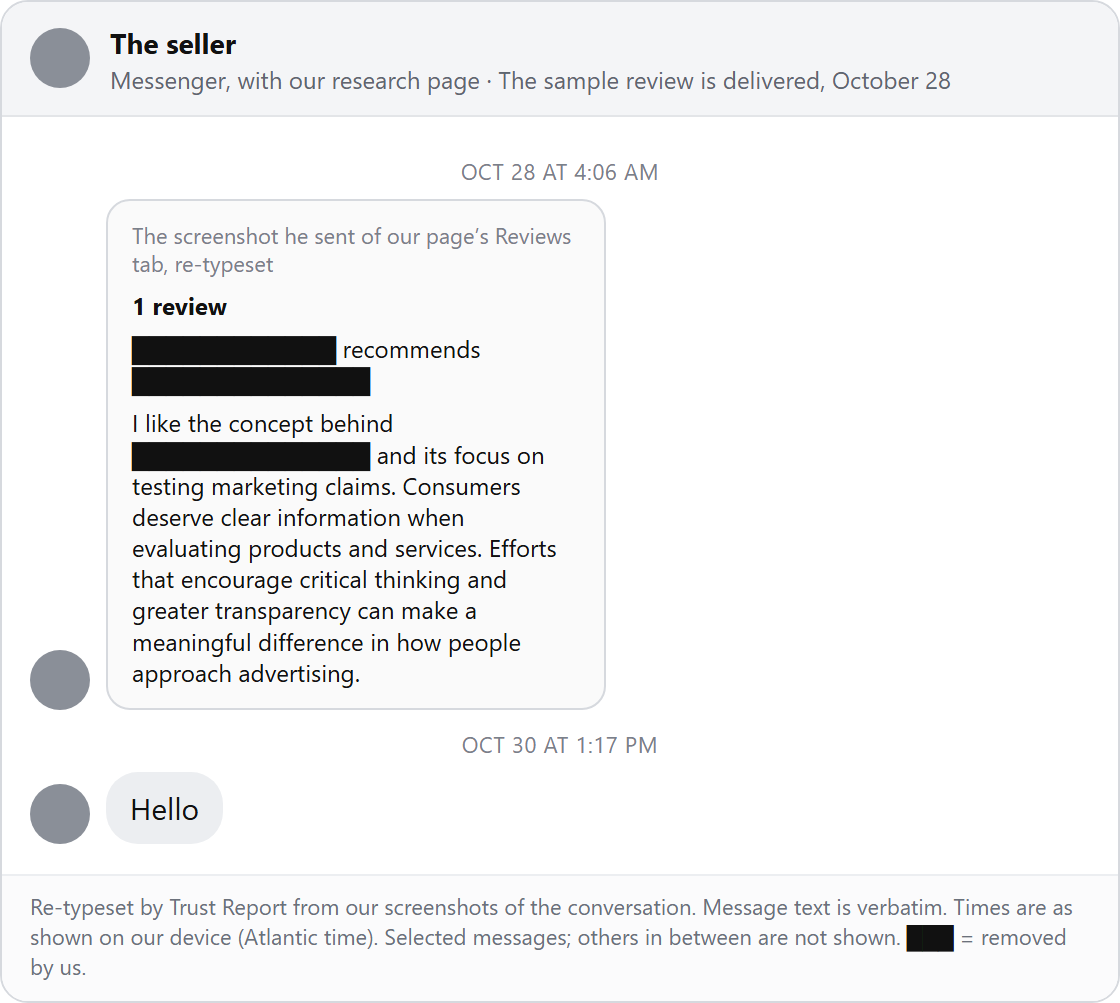
The account that posted it says it's from London. It has recommended six other UK small businesses, from roofing to removals. Its only two reactions came from two other accounts, one in Bangladesh. That's coordinated inauthentic behaviour at retail scale: a persona, a seeded reaction, a paying customer.
Anchor high, then make him wait
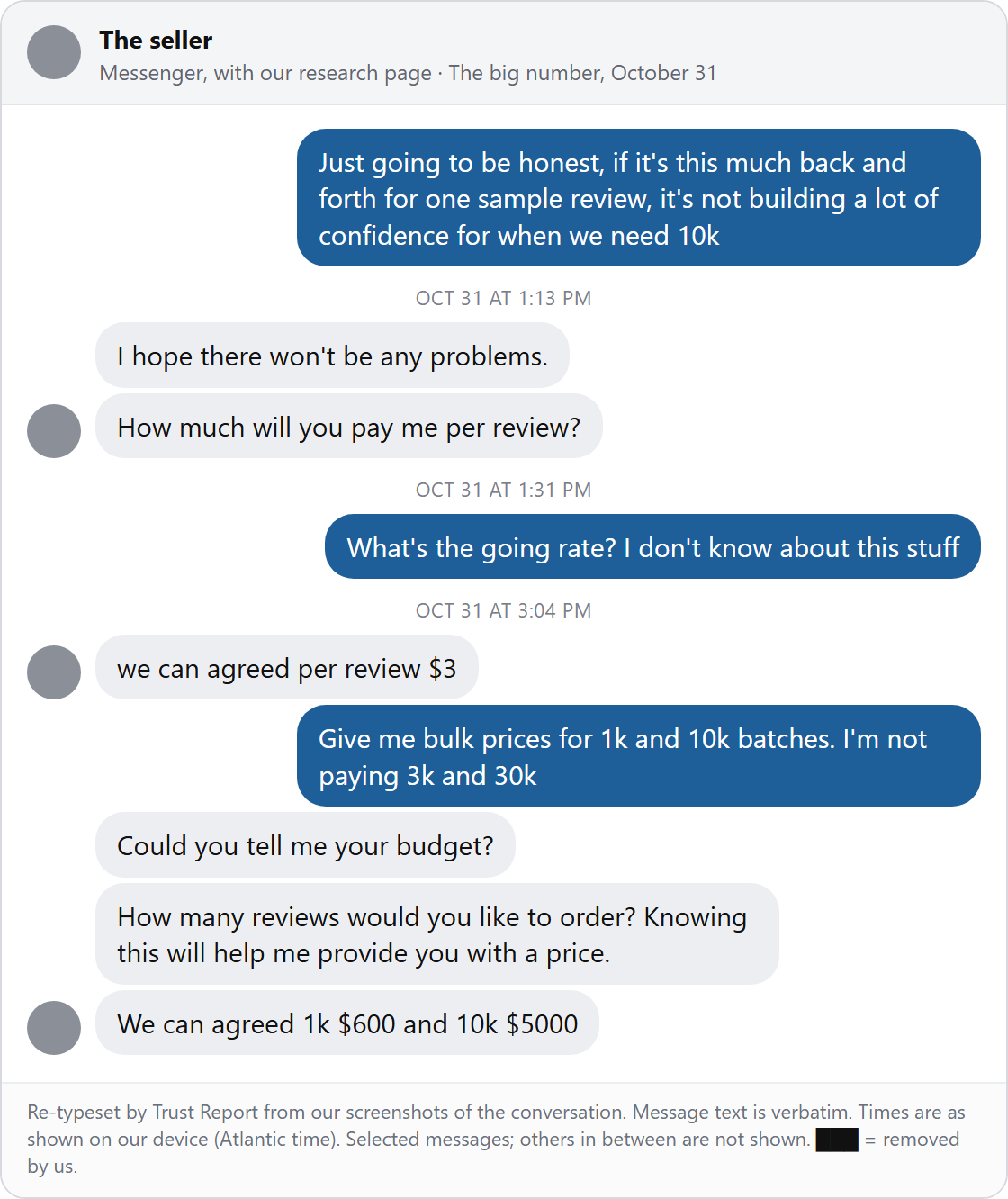
The big number did two things: it made him patient, and it made him eager. Then I did the thing pressure-sellers hate. I slowed down.
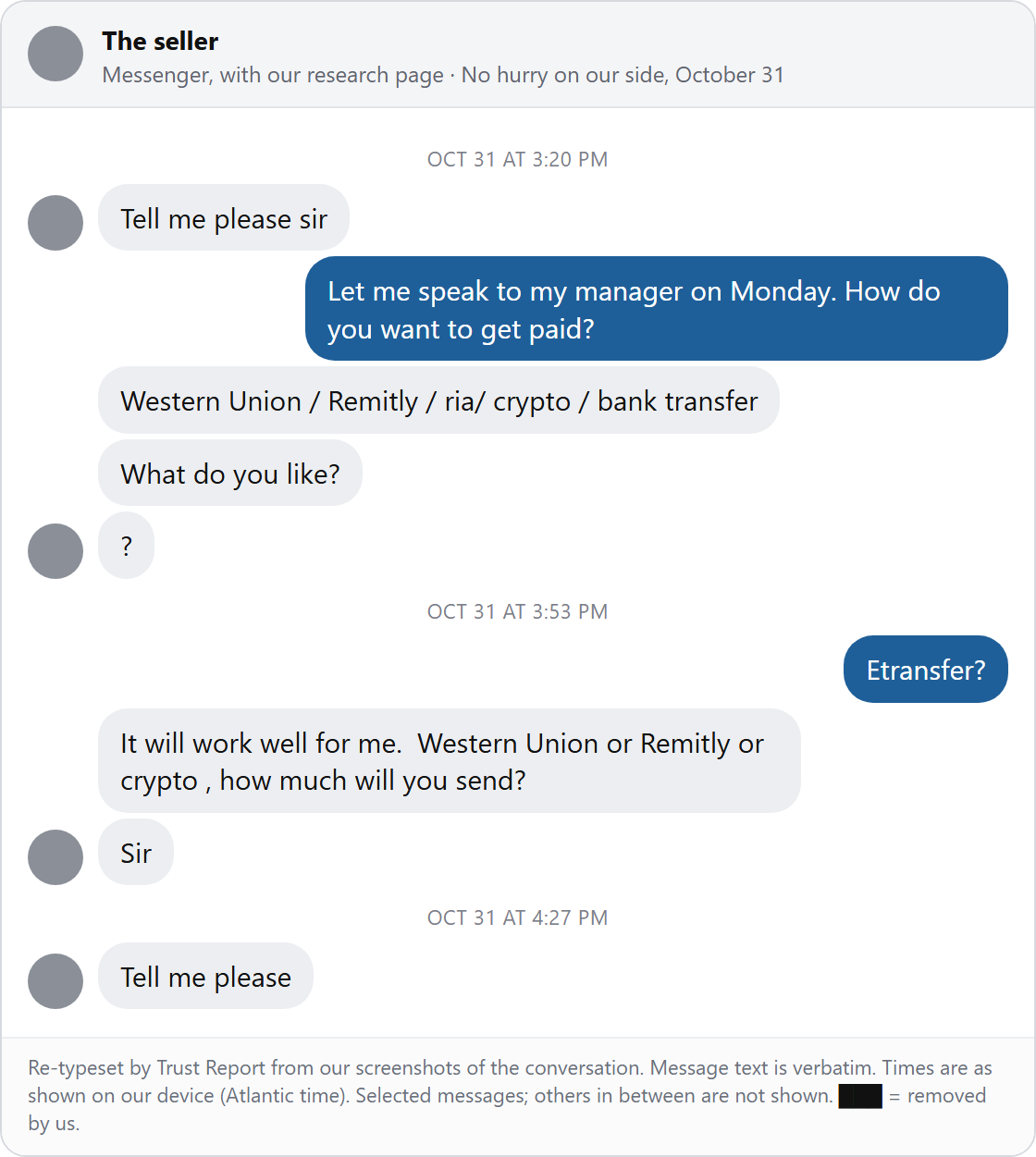
Pressure tactics run on urgency. I flipped it. He'd already sunk a free review into me and had a five-figure order dangling, so waiting cost him, not me. By the end he'd sent at least 25 unanswered nudges.
Never ask for the account number
I didn't ask how to pay him. I told him what my side would need and to "have things ready". He filled the gap himself.
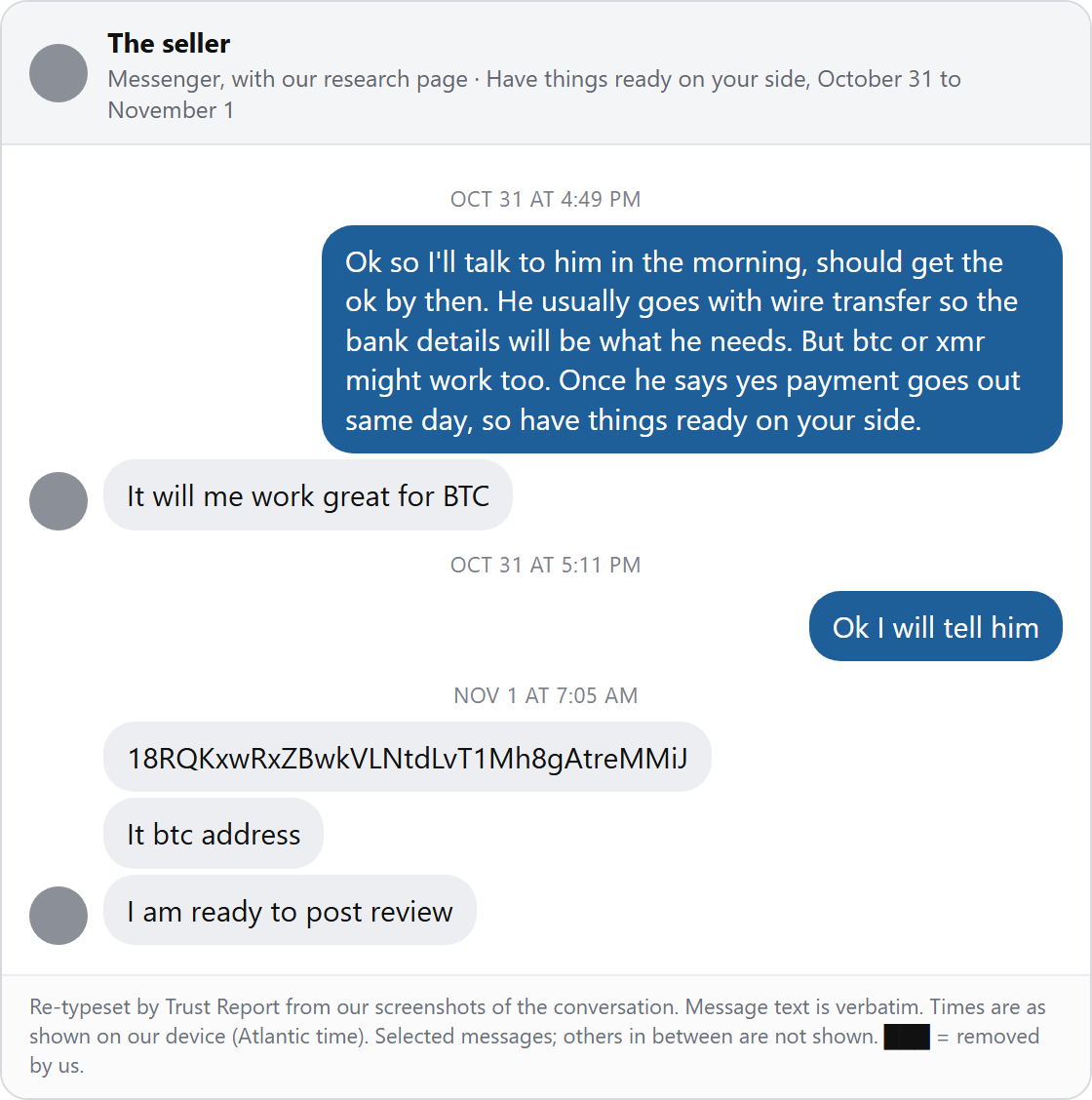
That address had two years of payments on the public ledger, all swept into a bigger wallet. One line later ("he can't get btc to work") he sent a UK bank account.
The form
Bank details tell you where money goes, not whose account it is. Every real transfer asks for the holder's name, so I built a generic online-banking transfer form: his details prefilled, one field blank and red, Submit greyed out. I sent a screenshot with one line.
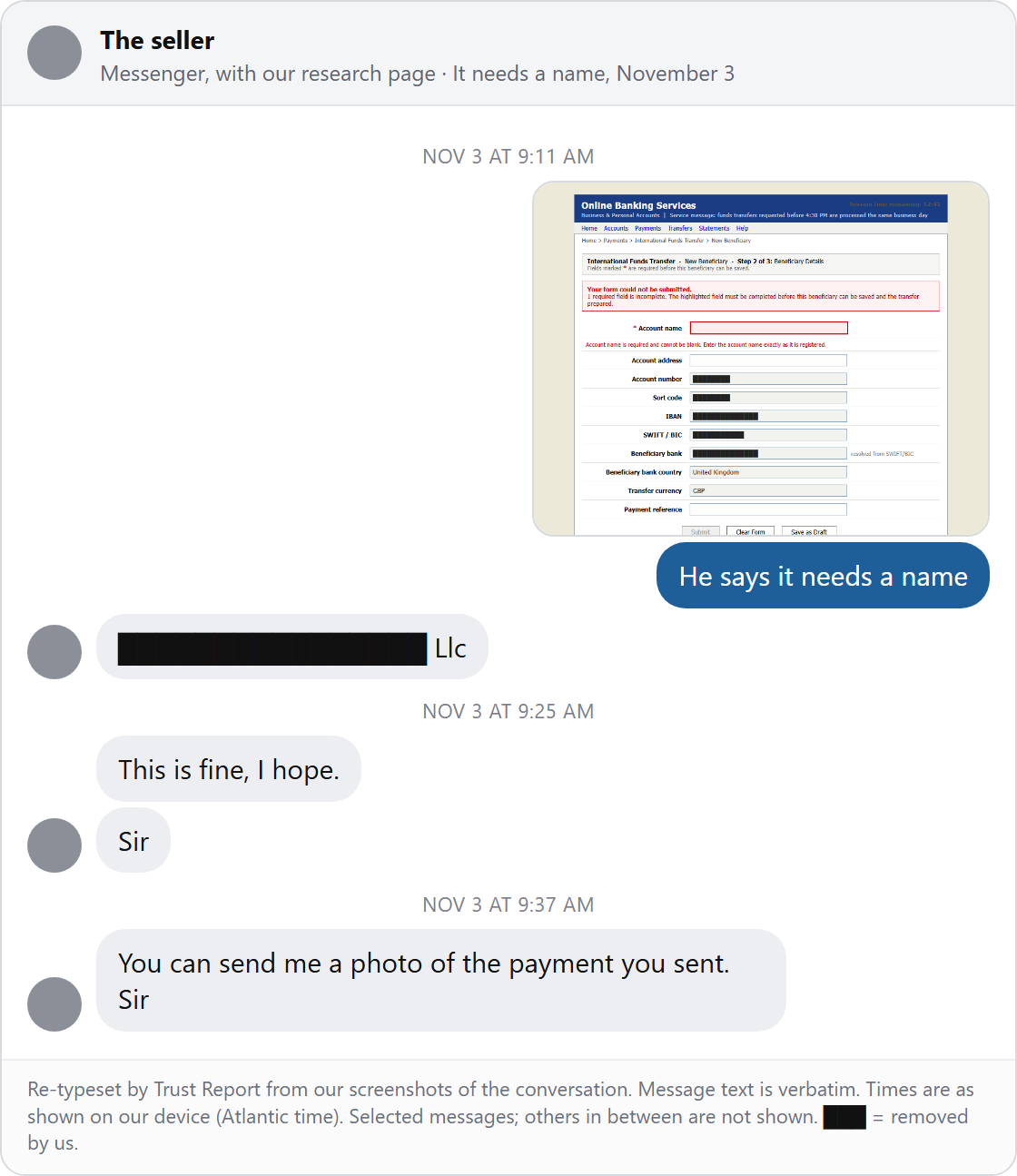
It's not a trick so much as the bank's own form refusing to proceed. He was finishing a transaction he believed in.
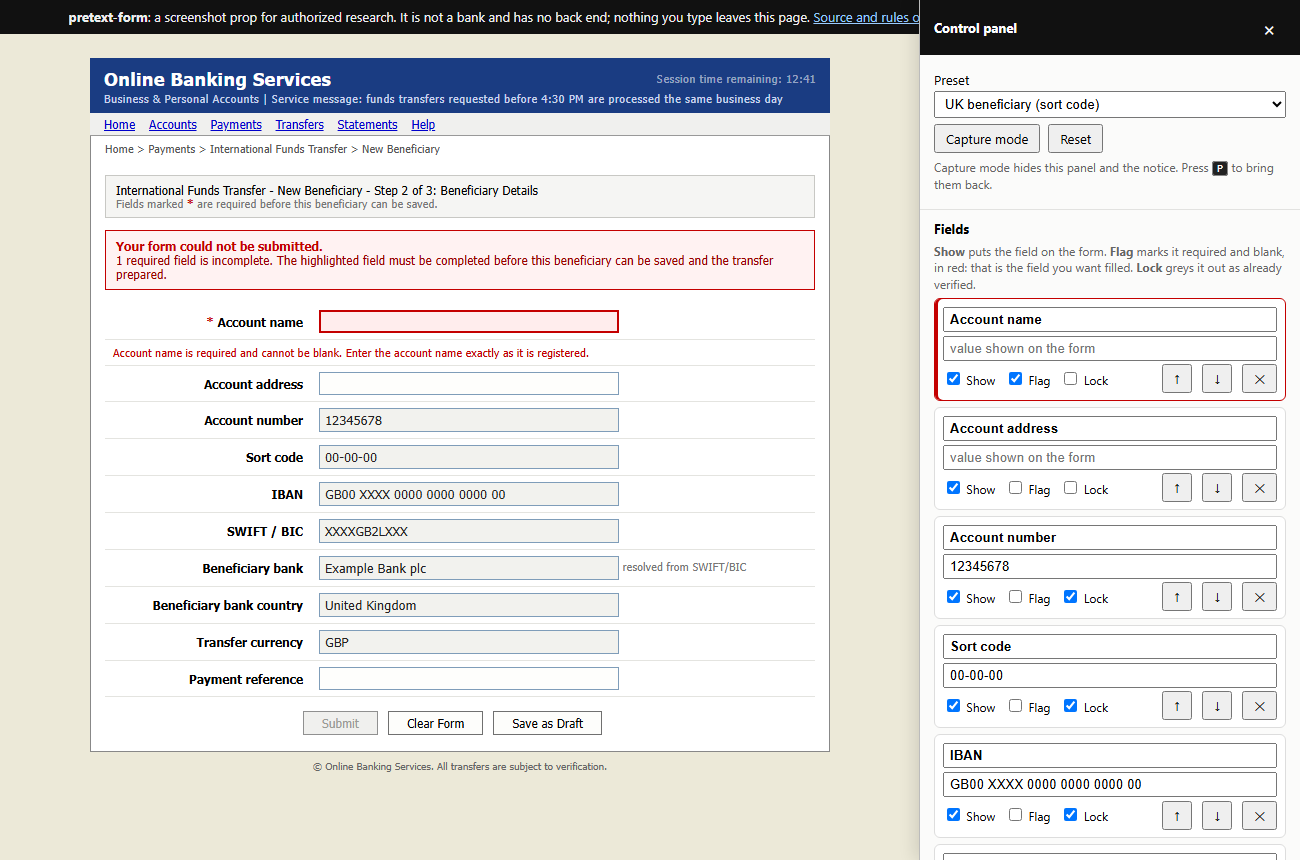
I've turned it into a tool: pretext-form. Pick a preset (UK, EU, US, Canada), flag whichever field you want filled, hit capture mode and screenshot it. It's offline with no back end, and the repo carries the rules of use: authorized work, screenshots only, and only ask for what a real payment would ask for.
The twist
First, the comedy. When his reviews stopped going through, he went into troubleshooting mode and started sending me screenshots of my own page, more than once, to show me where the problem was.
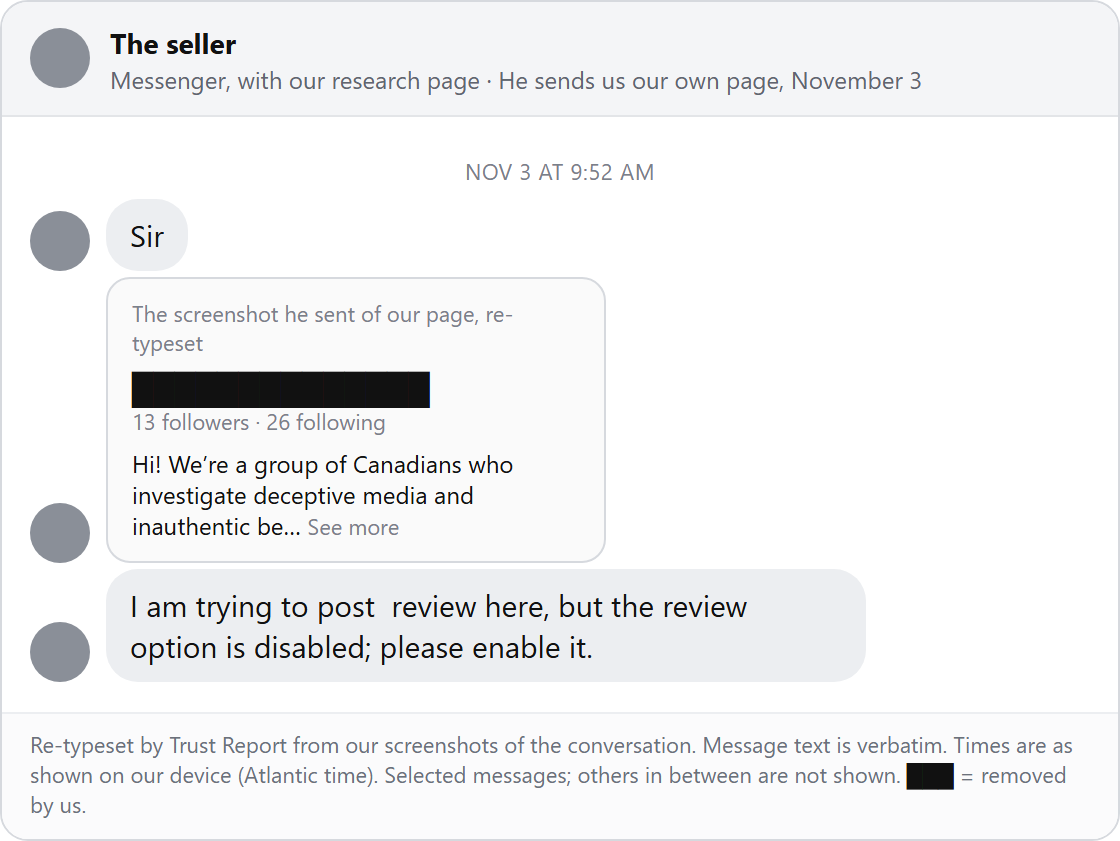
Then, when the review setting stayed off, he didn't walk away from the order. He asked for an account.
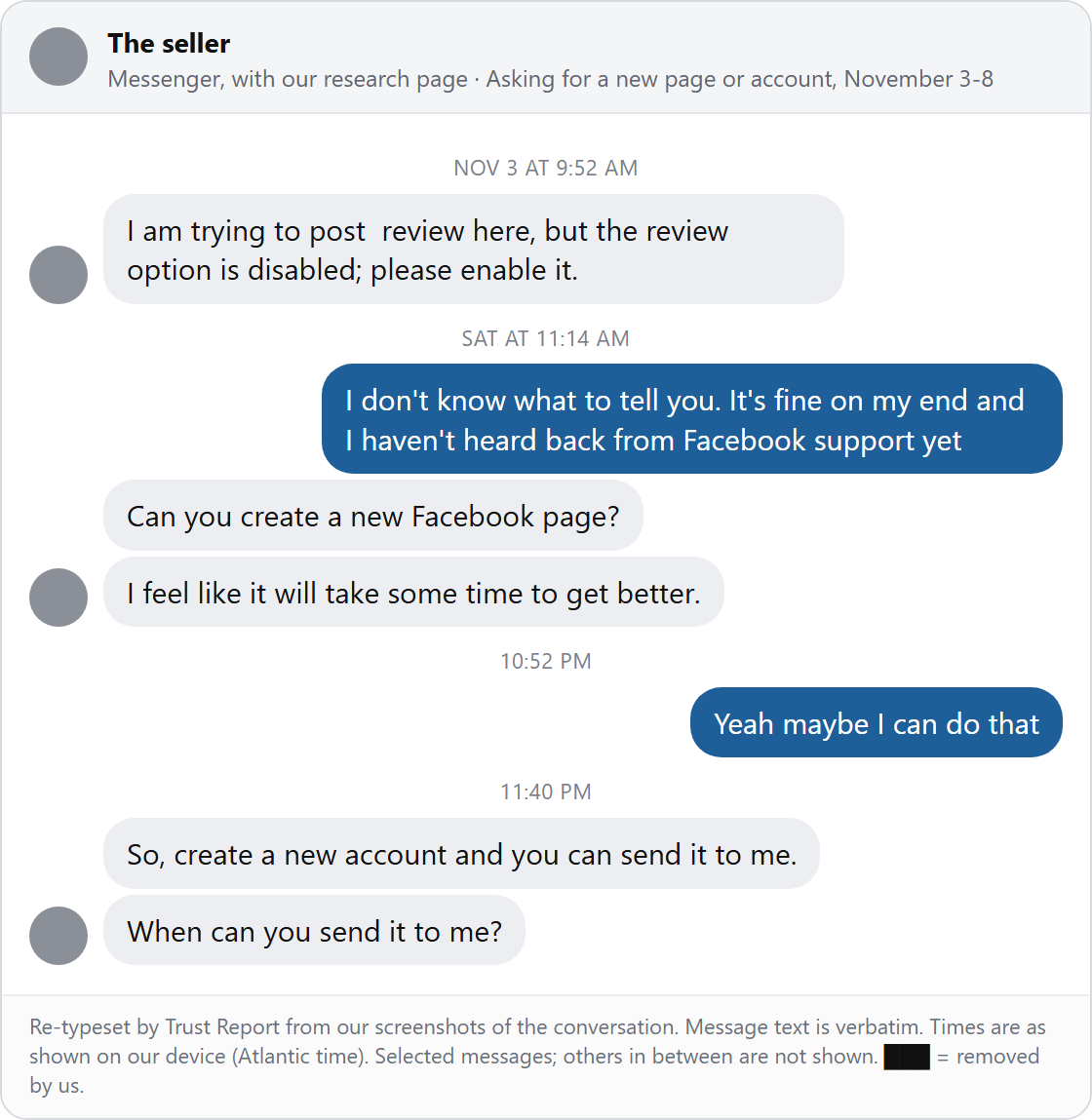
This is the part I want small businesses to hear. The engagement economy doesn't only sell fake reviews to you. When it can, it harvests you for the accounts it uses to sell to the next person. I stopped replying.
What to take from it
- Business owners: don't take the "free trial", and never create or hand over a page or account for anyone.
- Researchers: the buyer's seat is a collection position. Vendors have to talk to customers, and a customer can be you. Set your rules before the second message.
- Everyone: at 50 cents a review, the stars next to your plumber's name are cheaper than you think.
Everything went to Meta, the payment issuer, the RCMP and the Competition Bureau. The public record of the account is on Trust Report Canada, and its plain-language explainer is here.